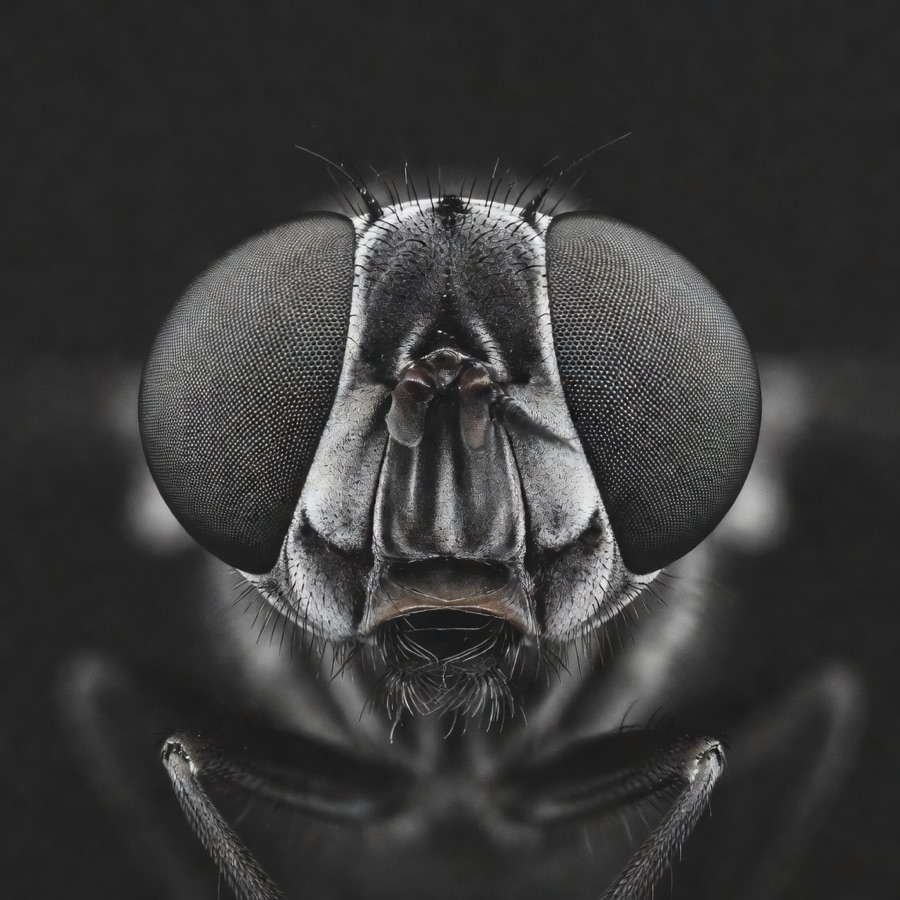




A fly brain plays video games and presses the buttons itself.
Doom runs on the fly’s escape circuit
When the fly brain fights in Doom, the enemies travel through the neurons a real fly uses to spot an approaching threat: the looming and collision detectors LC4 and LPLC1 in the lobula, into DNp04, a command neuron for take-off, and on through the posterior slope, where the fly forms its flight and head-steering commands. LC4 is one of the strongest inputs to DNp04 in the fly as well (Dombrovski et al., 2023). Switch LC4 off, and the brain wins 55% of rounds instead of 91%; switch off the posterior slope, and it wins 8%.
Dombrovski, M. et al. (2023). Synaptic gradients transform object location to action. Nature 613, 534–542. doi:10.1038/s41586-022-05562-8
In the fly brain
It sees each game through its compound eyes and presses the buttons itself. In Doom it fights with the fly's own detectors for approaching objects.