The fly brain’s compass holds a heading in the dark
With its wiring exactly as in the FlyWire map, the fruit fly’s head-direction ring keeps a heading in darkness once the timing of 28 of its cell types is tuned.
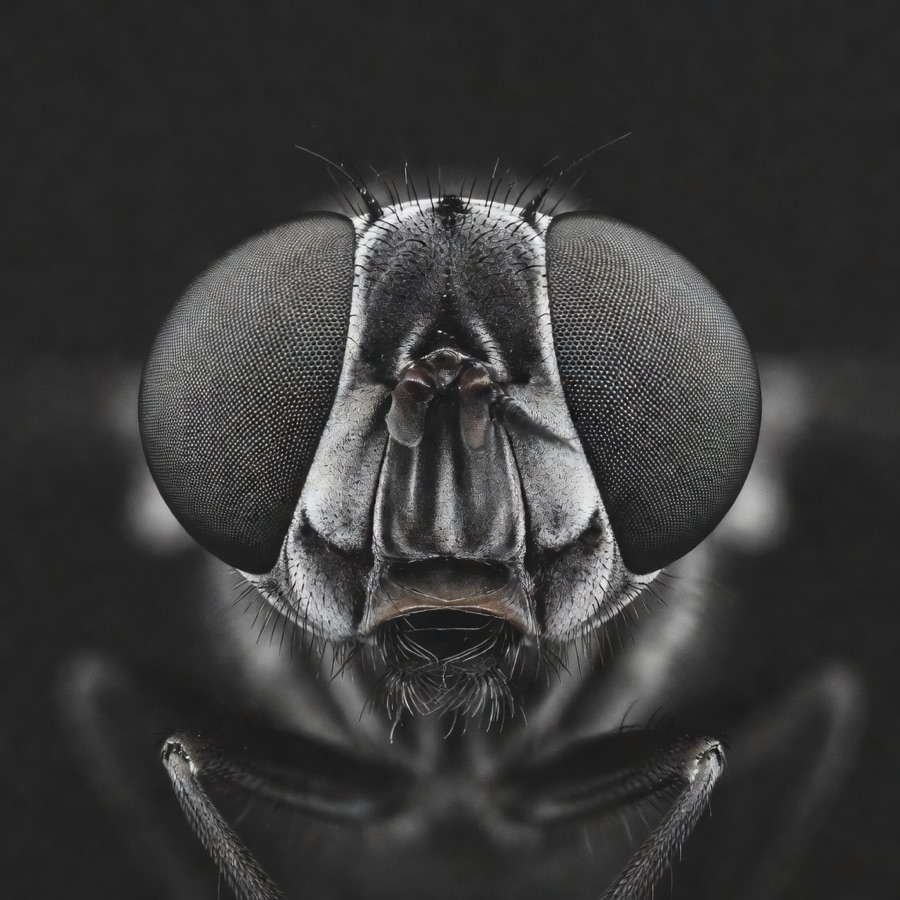
A fruit fly knows which way it is facing, even in the dark. In a ring-shaped structure at the centre of its brain, the ellipsoid body, compass neurons carry a single bump of activity that moves around the ring as the fly turns, like a compass needle. In darkness the bump keeps following the fly’s turns, and it stays put while the fly holds still (Seelig & Jayaraman, 2015).
The complete wiring of this circuit is now known. The FlyWire consortium mapped every neuron in the brain of one adult fly (Dorkenwald et al., 2024; cell types: Schlegel et al., 2024), including the 47 compass neurons, called EPG cells, and the cells that loop back onto them. That raises a simple question: is the wiring enough to hold a heading?
Wiring alone is not enough
We run the complete FlyWire brain in software, 138,639 neurons connected exactly as mapped. When we place a bump on the compass ring and switch off every input, it does not stay. Wherever we put it, it slides back to one fixed position: after 100 steps only 2 of 16 bumps are still near where we put them, which is chance. The map records which cells connect to which. It does not record how quickly each cell responds.
Tuning the cells’ timing
We kept every connection as it is. Only the ring’s own cell types, 28 of them with 459 neurons, were allowed to adapt: how strongly they respond, how active they are at rest, how quickly they forget and the rhythm of their activity. We tuned them on one task, holding a bump wherever it is placed, and then tested on 16 directions the ring had never been tuned on. A direction counts as held if the bump is still within 30 degrees of where we put it; by luck alone, about 3 of 16 would be.
The ring now held 15 or 16 of the 16 new directions for 100 steps, in each of three independent runs, and 11 to 15 after 300 steps. Without the rhythm the ring did not learn: in a control run with it fixed at zero, only 3 of 16 held.
Which cells hold the memory
We then switched off one cell type at a time, as neuroscientists do in real flies with genetic silencing. The ring was never tuned for this test. Without Δ7 or PEN cells it held at most 6 of 16 after 100 steps in every run, near chance for Δ7 and PEN2; without PEG cells it held 2, 8 and 5. Several ring-neuron types, most clearly ER2, ER4m and ER6, were not needed for 100 steps but were for 300: without any of them, holding fell to chance.
In flying flies, a bump placed with light is kept by the circuit, and a network with local excitation and global inhibition keeps it single and persistent (Kim et al., 2017). In our model, tuning made the loop of compass, PEN, PEG and Δ7 cells respond about 1.4 to 1.6 times more strongly and forget more slowly.
A prediction for real flies
In the fly, PEN cells move the bump when the fly turns (Green et al., 2017), and blocking their output in walking flies weakens the bump and makes it jump (Turner-Evans et al., 2017). Our model predicts that the bump also fails to hold when the fly stands still in the dark. To our knowledge that has not been tested on its own.
What comes next
Next, the compass turns with the body and holds its heading for longer.
The fly’s wiring diagram, unchanged, held a heading in the dark once 28 of its cell types were given the right timing.
We thank the FlyWire consortium for the wiring diagram and its cell-type annotation.
References
- Seelig, J. D. & Jayaraman, V. (2015). Neural dynamics for landmark orientation and angular path integration. Nature 521, 186–191. doi:10.1038/nature14446
- Kim, S. S., Rouault, H., Druckmann, S. & Jayaraman, V. (2017). Ring attractor dynamics in the Drosophila central brain. Science 356, 849–853. doi:10.1126/science.aal4835
- Green, J. et al. (2017). A neural circuit architecture for angular integration in Drosophila. Nature 546, 101–106. doi:10.1038/nature22343
- Turner-Evans, D. et al. (2017). Angular velocity integration in a fly heading circuit. eLife 6, e23496. doi:10.7554/eLife.23496
- Dorkenwald, S. et al. (2024). Neuronal wiring diagram of an adult brain. Nature 634, 124–138. doi:10.1038/s41586-024-07558-y
- Schlegel, P. et al. (2024). Whole-brain annotation and multi-connectome cell typing of Drosophila. Nature 634, 139–152. doi:10.1038/s41586-024-07686-5